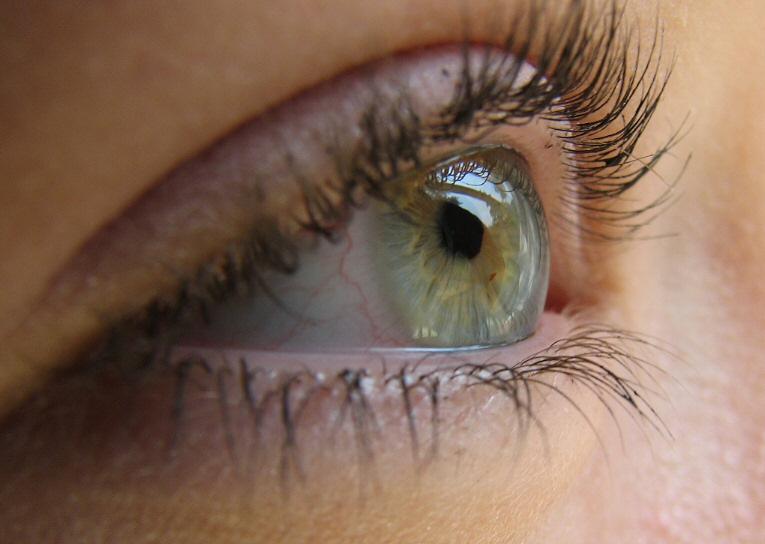
It seems that seeing is believing is closer to the reality than we thought. The world we see through our eyes, we think of as simply a visual reflection of the real world brought to us by our eyes via the brain, this is not however the whole story. In the centre of the eye is a dense patch of photoreceptor cells about a millimetre across called the fovea and it’s the eyes sweet spot. The photoreceptors away from the fovea inside the eye provide a rapid dropping off of focus, resolution and colour. The effect is that the eye is more like a little highly focussed narrow beam flickering constantly around the scene we are watching but never encompassing the whole eye’s view. If you hold out your arm the attention and focus spot is about the same size as your thumbnail. The eye flickers constantly and these tiny scanning movements are called saccades and happen about three times a second and last no longer than two hundred milliseconds So why does our perception of the world feel like a full colour movie happening in front of us? With each pause of the eyes focus, the brain receives a little bit of high resolution colour information, which it manages to very cleverly process into a highly detailed, continuous visual experience of the world around us. The interesting thing is that as the eye makes one of its moves or saccades the brain stops processing the visual information stream. Given that the eyes perform around 150,000 saccades every day your visual system is offline for about 4 hours each waking day. The brain however smoothes out the flow filling in the missing bits so we don’t notice. How the brain builds a world picture out of this stream of small fragmented bits of information, is unknown but some theories assume that the brain is making a continual ‘best guess’ as to what’s happening now and what’s going to happen next. Due to the delay it takes for the optical nerve signals to be processed by the brain means that there is a tiny lag between the receiving and the processing of visual information, which means the brain has to be making little assumptions all the time about what is going to happen in the future. If the brain couldn’t do this predictive calculating you’d never catch a ball or dodge a moving object. So in truth the world you see is far from a real one but is a sort of construct that the brain creates and then uses to model the world for us. This has been proved in psychological tests to be painfully true, where it’s been discovered that people’s perception of events are not only built on their internal construct but sometimes reflect a very dodgy version of reality. So when you’re next in court and a witness in your case is asked to describe exactly what they saw….start worrying!!
 Andrew Hillary