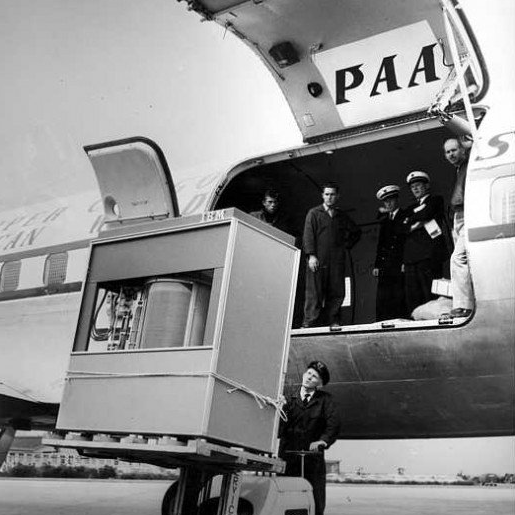
It is always worth reminding ourselves of just how much has changed in a relatively short time. It helps give perspective to how people will look back to 2016 and perhaps laugh at our latest developments!
It is always worth reminding ourselves of just how much has changed in a relatively short time. It helps give perspective to how people will look back to 2016 and perhaps laugh at our latest developments!
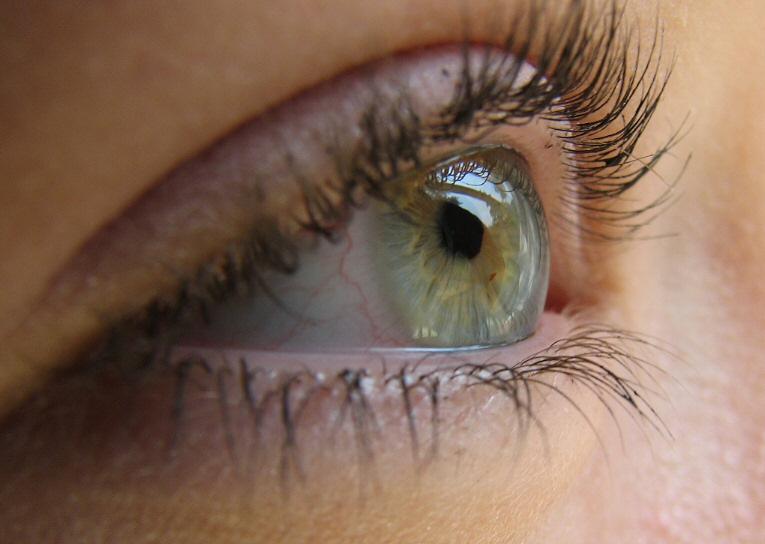
It seems that seeing is believing is closer to the reality than we thought. The world we see through our eyes, we think of as simply a visual reflection of the real world brought to us by our eyes via the brain, this is not however the whole story. In the centre of the eye is a dense patch of photoreceptor cells about a millimetre across called the fovea and it’s the eyes sweet spot. The photoreceptors away from the fovea inside the eye provide a rapid dropping off of focus, resolution and colour. The effect is that the eye is more like a little highly focussed narrow beam flickering constantly around the scene we are watching but never encompassing the whole eye’s view. If you hold out your arm the attention and focus spot is about the same size as your thumbnail. The eye flickers constantly and these tiny scanning movements are called saccades and happen about three times a second and last no longer than two hundred milliseconds So why does our perception of the world feel like a full colour movie happening in front of us? With each pause of the eyes focus, the brain receives a little bit of high resolution colour information, which it manages to very cleverly process into a highly detailed, continuous visual experience of the world around us. The interesting thing is that as the eye makes one of its moves or saccades the brain stops processing the visual information stream. Given that the eyes perform around 150,000 saccades every day your visual system is offline for about 4 hours each waking day. The brain however smoothes out the flow filling in the missing bits so we don’t notice. How the brain builds a world picture out of this stream of small fragmented bits of information, is unknown but some theories assume that the brain is making a continual ‘best guess’ as to what’s happening now and what’s going to happen next. Due to the delay it takes for the optical nerve signals to be processed by the brain means that there is a tiny lag between the receiving and the processing of visual information, which means the brain has to be making little assumptions all the time about what is going to happen in the future. If the brain couldn’t do this predictive calculating you’d never catch a ball or dodge a moving object. So in truth the world you see is far from a real one but is a sort of construct that the brain creates and then uses to model the world for us. This has been proved in psychological tests to be painfully true, where it’s been discovered that people’s perception of events are not only built on their internal construct but sometimes reflect a very dodgy version of reality. So when you’re next in court and a witness in your case is asked to describe exactly what they saw….start worrying!!
It is pretty straight forward when talking about corporate talent, we can see the performers who raise share value or steer a company into a new direction. Steve Jobs at apple is a highly talented visionary as is his designer Jonathan Ive. There are countless examples of people in business, science and technology, sports and the arts, who are universally recognized as being highly talented.
What is trickier is if you ask who can you quote as being recognisably wise in business, sports, the arts, or science and technology. There are exceptions you might think that David Attenborough is a good candidate for a wise man
Wisdom is a bit old fashioned in the modern, online, connected, global entity and it’s much more difficult to spot or recognize.
One description of Wisdom is:
‘Wisdom is comprehension of what is true or right coupled with optimum judgment as to action. Synonyms include: sagacity, discernment, or insight. Wisdom often requires control of one’s emotional reactions (the “passions”) so that one’s principles, reason and knowledge prevail to determine one’s actions’.
Wisdom is less about performance and more about judgment, for example I have never seen a person’s CV with anything that relates to their capacity for wisdom or a ratio of how wise they are, yet wisdom is not about the stereotypical image of old men, long beards and philosophising, it is about performance but it is also about looking beyond the immediate requirement and making judgments that have an ethical and moral dimension.
At first sight you might say that it’s pretty obvious that wisdom is a good thing, that we need to have wise people in charge of commercial and public entities but I suggest that it more important than that. You don’t get a wisdom module with an MBA and wisdom has traditionally been associated with paternalism and something that a hundred years ago came under the responsibilities of church and societies so-called elders. The Victorians were familiar with the idea of people in authority showing wisdom as part of their skills set, although to be honest they suffered just as badly from the deeply unwise decisions and judgments made by their politicians, generals and judges.
The traditional board directors were once chosen because they brought not only expertise to the companies endeavors but supposedly wisdom, wisdom that was a check and balance against ‘unwise’ commercial decisions, a reference point on what the company was trying to achieve. These people exercised a wider judgment around what the effects of board decisions were on the society and the people that the company worked with.
The story of Marconi and its fall from being a cash rich diverse and proftable busienss to a hollwo shell is a classic case study of when wisdom is missing in leaders.
The Marconi story is a story of how two men took over a bellwether of British industry, a business with a heritage stretching back more than a century with £2.6bn of cash reserves, and squandered their inheritance in little more than two years. And it is a story of how billions of pounds and dollars were bet on the internet revolution and how a large amount of that money was lost. The fact that the company’s name was changed to reflect its long association with the inventor of the radio might be seen as a disservice to Guglielmo Marconi.
When George Simpson, as he was known then, arrived at the company in September 1996, it was called GEC and had been run for 33 years by one of the great men of British business, Lord Arnold Weinstock, who insisted on calling himself managing director. But within months of Simpson’s arrival Lord Weinstock was gone. Or, to be precise, he was kicked upstairs and given a small office and the empty title of chairman emeritus. Simpson began to dismantle the rest of the old guard, firing or easing out long-standing executives and bringing in his own men. His most important recruit was John Mayo, a corporate financier, who was drafted in as finance director. Mayo had risen to prominence at the investment bank SG Warburg where he helped mastermind the break-up of ICI and was then rewarded with the job of finance director at the demerged pharmaceuticals business Zeneca.
The two men drew up a blueprint for GEC that looked nothing like the business they had inherited and owed a lot to Mayo’s financial engineering skills. This rings bells with reference to the banking crisis and their love of complex financial products.
In January 1999 they did the first of the three mega-deals that were to transform GEC by announcing the £7.7bn (£5.5bn) sale of its defence interests to British Aerospace in exchange for cash and shares.
Investors chased up Marconi’s share price to the dizzy heights of £12.50, valuing the company at £35bn. In 2001 it was valued at £3.1bn, less than a 10th of its all-time high. In fairness to Simpson and Mayo, the performance of Marconi has mirrored that of other technology, media and telecoms stocks. All had been hit savagely in the collapse of the dot.com boom of the late 1990’s and the downturn in equipment spending as telecoms struggled under the huge borrowings taken on to finance their third-generation mobile networks.
While profit warnings flew thick and fast from counterparts such as Lucent, Cisco, Nortel and Alcatel, the men from Marconi seemed to be in denial, insisting there was no need for a trading statement because there was nothing to update. There followed a contraction of the business and its value that was quite spectacular and The rest as they say is history; A corporate story on the scale of a modern corporate Greek tragedy, a tale of pride, ‘talent’ and a massive lack of wisdom.
In the current world of climate change, shifting geopolitical scenarios and a constant air of threat, economic uncertainty and risk… perhaps headhunters and recruitment managers should be looking out for future leaders with talent but more importantly, with wisdom!
The challenge now is how do you recognise it and measure it!
As Naguib Mahfouz said…… “You can tell whether a man is clever by his answers. You can tell whether a man is wise by his questions”
The one thing that I am more than passionate about, is promoting and developing creativity… and on the basis that it is going to take a lot of creative thinking to find some life saving solutions to some of the global threats to our world, it is something we need to really promote, foster and mentor!
There is: climate change, diminishing biodiversity, food scarcity, water scarcity, looming resource wars and vast changes in the geopolitical status of the world….for starters!
There is a website called inventnow.org and it is a place for kids as well as adults to load up and display their ideas.
Some are completely bonkers and some might look bonkers at first but actually show some wonderful youthful lateral thinking. I recommend a visit because the kids who are posting their ideas on it now are going to be the next generation of scientists and imagineers and we are really going to need some their clever, original thinking to save us!
if you have a young family member or child of your own…… point them in its ditrection immediatley!!
lets start growing more Leonardo’s!
http://www.inventnow.org/gallery/

This is Bruce Mau’s thought provoking, Incomplete Manifesto for Growth, I think that it might apply either in the corporate world or in the personal world!…..you decide!
The internal voice – the source of human narrative?
In recent research into the way the human brain synthesises speech, it has been discovered that there is a complex sequence of events that takes place to transform thoughts into language and speech. One of the drivers of this research has been to find ways in which communication can be opened with patients suffering from ‘Locked In’ syndrome where due to brain damage or disease they are conscious but cannot move the larynx, mouth or lungs to speak.
By the mid 1990’s the ability to read brain signals had advance considerably from the days of Dr Hans Berger’s invention of the electroencephalograph (EEG), which placed electrodes on the brain to measure the electrical activity of the brain’s neurones firing.
One of the main objectives was to find a way in which a device could be constructed which could instantly translate the electrical signals of our ‘inner voice’ into a sound produced by a speech synthesis device. This approach meant focussing on the signals coming from the brain areas that govern speech.
In 2008 the neuroscientist Philip Kennedy succeeded by focusing in on the face and the specific part of the motor cortex which controls the larynx, mouth and tongue, where you can identify the various muscle signals that are used when a person speaks.
Saying a specific word needs a specific combination of movements with the lips, tongue and lungs pushing the air through a shape in your mouth created by the muscles pulling the mouth into a shape that changes as each component of the word is expressed. Kennedy and Frank Guenther, a neuroscientist at Boston University read these signals in a person with Locked In Syndrome and by implanting deep electrodes in their facial motor cortex, they were able to identify three vowel sounds and feed them into a speech synthesiser. By using this approach Kennedy and Guenthther could sample up to a 100 useful words for this patient over a five year period.
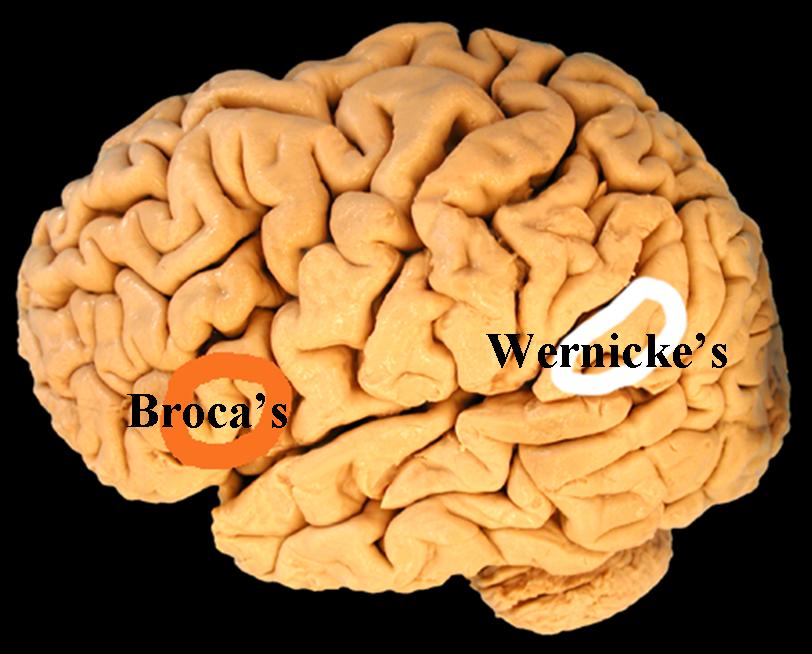
The translation of actual thoughts into language is a complex and mysterious process. It appears that thoughts have to go through two main staging areas before they become an expression of speech. The first area is Wernicke’s area which deals with semantics, ideas which are conceptual rather than linguistics. This includes meaning based around images, smells or emotional memories. The study of patients who through strokes have suffered damage to the Werncike’s area show a loss of semantic associations; words don’t make sense when split from their meaning. Patients have trouble understanding not just what people are saying to them, but what they are also thinking.
The second staging area is Broca’s area, which it is thought is the brain’s speech synthesis centre. It is here that the semantic meanings are translated into phonetics and then word component form. These signals are then assembled into sets of meaningful words in the right order to go to the motor cortex for the mouth, larynx and tongue to express as speech.
As part of any individual experience of consciousness there is clearly an internal voice that operates inside our minds. We hear this voice expressing our thoughts in words and sentences as we experience the world in real time and interact with it.
As you hear this inner voice two things are happening, you hear yourself producing language in Wernick’es area as you construct it in Broca’s area.
From the mechanical perspective there is still the need to imagine a sort of mental language ‘Rosetta stone’, which enables the quarter of a million distinct words in the English language to be instantly recognised and processed within this internal voice/speech process. One possible candidate for this process are phonemes, which are the most basic building blocks of language and are the most likely evidence of the early evolutionary signs of language development in early hominids.
The English language had about 40 phonemes and every word contains some subset of theses building block phonemes sounds, such as ‘kuh’ as in School or ‘sh’ as in shy. These phonemes effectively allow the brain to decode every word on the instant of hearing it.
Research is now looking at how to link the inner voice system with speech synthesis devices and that other holy grail long described in science fiction, of controlling devices and machines by thought alone or rather with instruction generated by the ‘inner voice’.
From the perspective of the development of human consciousness there seems to be a very clear link between the appearance of language and the ability to perceive the world through the reflective inner human mind. The birth of language seems to have come during the Palaeolithic era and although difficult to predict accurately, it seems that language as we would recognise it developed around 100,000 years ago and language and consciousness seem to be inextricably linked.
Before language or speech, human consciousness was similar to animal consciousness although probably more refined. In animals, an organism sees subject and object as largely the same. Information flow through the animal consciousness is episodic, mainly driven by external stimulus and reacted to in a largely instinctive way based on an inherited and set of genetic predispositions. A primary default setting for consciousness is indifference and things only become worthy of attention when they change, presenting either an opportunity or a threat. The perception of events is largely discontinuous and lacks any form of narrative which creates causality and the internal story-telling process, which turns expectation into a concrete real world view.
Cognitive psychology shows that most conscious experience is the function of memory, with sensation often the trigger. Experience is almost always the containment of perception within memory. The conscious self takes the role of the architect of perceived continuity, taking the phenomena of sensation and building a story around them. The ‘story’ is mostly built on expectations, beliefs and memory. The ‘self’ produces the internal narrative and the sense of being in time. The theory of mind is the core theory that defines how human intelligence allows humans to see others as separate from themselves yet able to make predictions about behaviour and outcomes which rely on having an internal mental model of the real world and the internal narrative to make predictions about what are the consequences of an individual’s actions.
Moving this concept on, language allows the sharing of this way of experiencing the world and one of the core functions of language is that it is fundamentally a shared process, speech is designed to link individuals in an interaction, it therefore follows that there is a deep link between the internal narrative, its shape and flow and deep links with other humans. The sharing of language is as fundamental as language itself; it is almost a function of language that is inextricably linked to the sharing and the interactive process.
The implications are interesting because once the flow of information through the organism is no longer constrained by the immediate needs of the individual organism, the nature of it’s unique internal world view automatically becomes a shared and communal view of the world. The organism now becomes one of a community of organisms with a unique relationship that is a million miles away from the natural herds, swarms or flocks, typical of other animal social structures.
This sees a collective intelligence develop which effectively ‘fast tracks’ the homo sapiens on the evolutionary race, through to much higher intellectual capabilities to hunt, protect and survive. This ability marks Homo Sapiens out from the other competing hominids, such as Neanderthals and Homo Erectus that lived at the same time as early homo sapiens. It is Sapiens that developed language and speech most effectively and ended up seeing the other hominids become extinct.
Language generated collective knowing and by connecting individual intelligence, created a powerful capability within human groups to dominate the environment they lived in.
The ‘shared experience’ of life can be seen as the driver for the concept of storytelling as it is only a tiny step removed from the internal narrative. Individuals shared a collective narrative, which enshrines the collective experience of the world. The ‘myth’ and ‘the story’ are more closely allied to the natural architecture of the human brain, the functions of language and the feature of the internal voice.
Any story is like an extension of shared thought processes and using language, effectively links human brains in a fundamental and natural network. Story-telling is almost in the same evolutionary category as eating and breathing, it is fundamental and clearly hints at considerable evolutionary advantages that ensured its survival and made it such a feature of modern human’s brains.
Speech and language create problems as well as opportunities and the ability to share experience in human communities also creates considerable stress far above the stress seen in animal pack behaviour or pecking orders. Competition and ranking are far more complex and therefore easier to get wrong or misinterpret. Human society is a stressful one, where the dangers from your fellow humans are almost on a par with natural threats from the outside world. A creature with highly complex behaviour needs very complex emotional understanding and intellectual capability to interpret and manage any interactions with other humans. We can read micro muscle movement in face to give us information about another’s emotional state and intentions. We need to know with each encounter whether this person is an ally, mate or threat.
This puts a greater emphasis on the usefulness of myth and storytelling to help codify patterns of behaviour that can ease the stress of dealing with other humans and make human communities more manageable for the individuals.
We now see how ritual and myth have become intrinsic features of the human brain and its structure. Ritual is the performance of myths that binds the individual and the specific to the universal and the archetypal. The brain’s shared inner voice is the primary mechanic in which human being experience their life in the world and with others.
All the great mythical stories and ‘mythical magic’ takes the power of the word as it primary currency. Words are all powerful and are the starting point of belief systems, “In the beginning was the Word, and the Word was with God, and the Word was God ” and this extends into the mechanics of sympathetic and imitative magic ritual where naming forces outside our control helps to exert influence over their behaviour.
Within the development of religion and art we can see how the inner voice is the foundation of artistic reflection and thinking. It is arguable about what evolutionary benefits art brings to the human organism but it is ubiquitous among human societies and cultures and shows large investments of time and energy by individuals for uncertain benefits.
Somehow there appears to be a link between the shared inner voice through language and speech, with human communities and the expression of art as a shared process among groups of humans, where the artist and the viewer are linked in ‘mind’.
Mythological material and experience seems to be genuinely part of the fundamental software of the human brain and part of the underlying architecture of human intelligence and behaviour, which is why its power and relevance to modern human behaviour and thinking is utterly valid and primarily powerful.
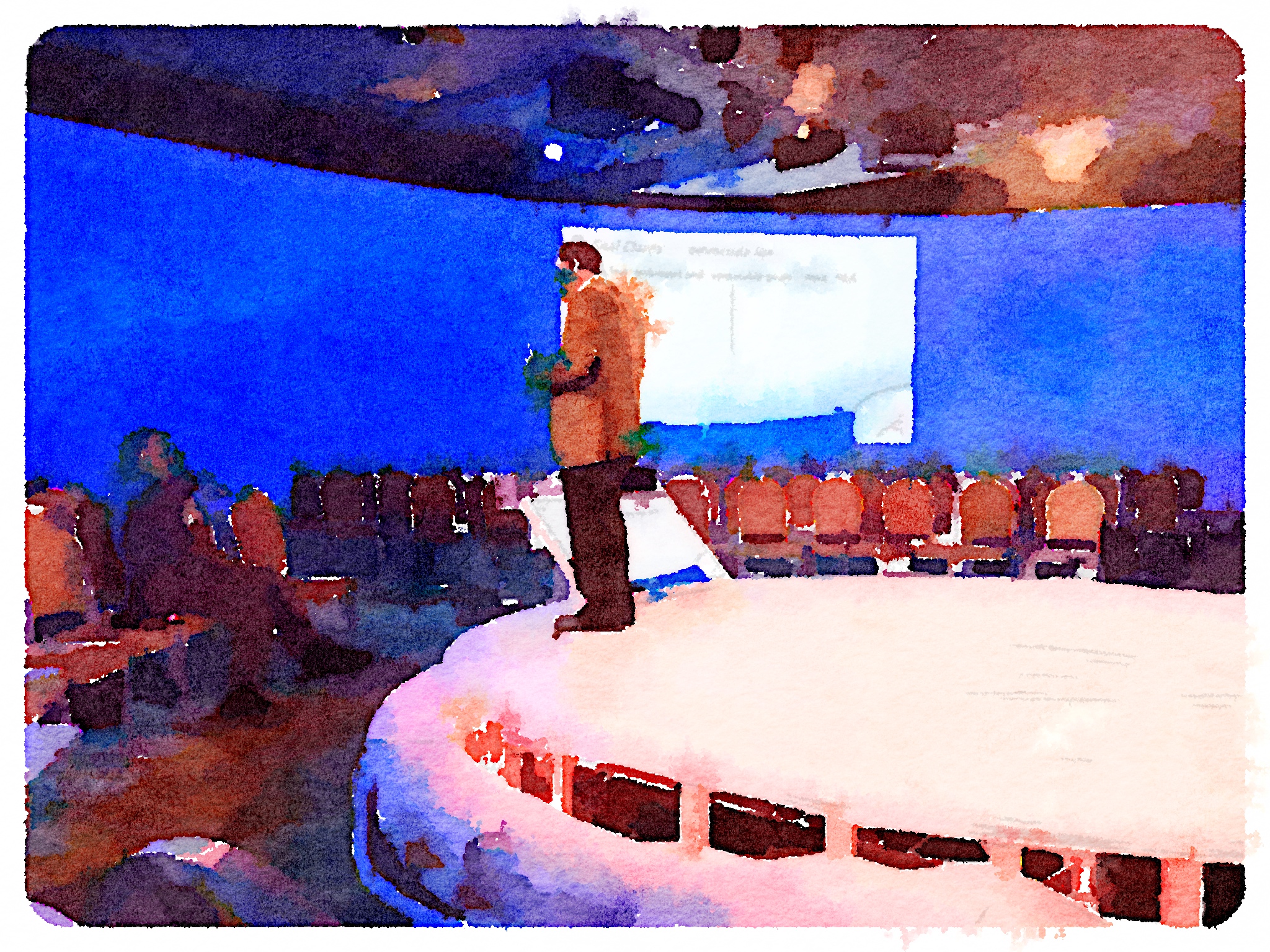
Sometimes when you need to make a series of presentations to an audience where your key objectives are creating a sense of ownership and involvement, where you want the speaker and audience to be tied into a sense of being part of the same, whole, experience….using an in-the round stage setting can change the dynamic of the whole experience both for the audience and the speakers.
 Andrew Hillary